

Norway fare strategy
The cheapest way into Norway begins with the fjord, island or Arctic region—not Oslo by default
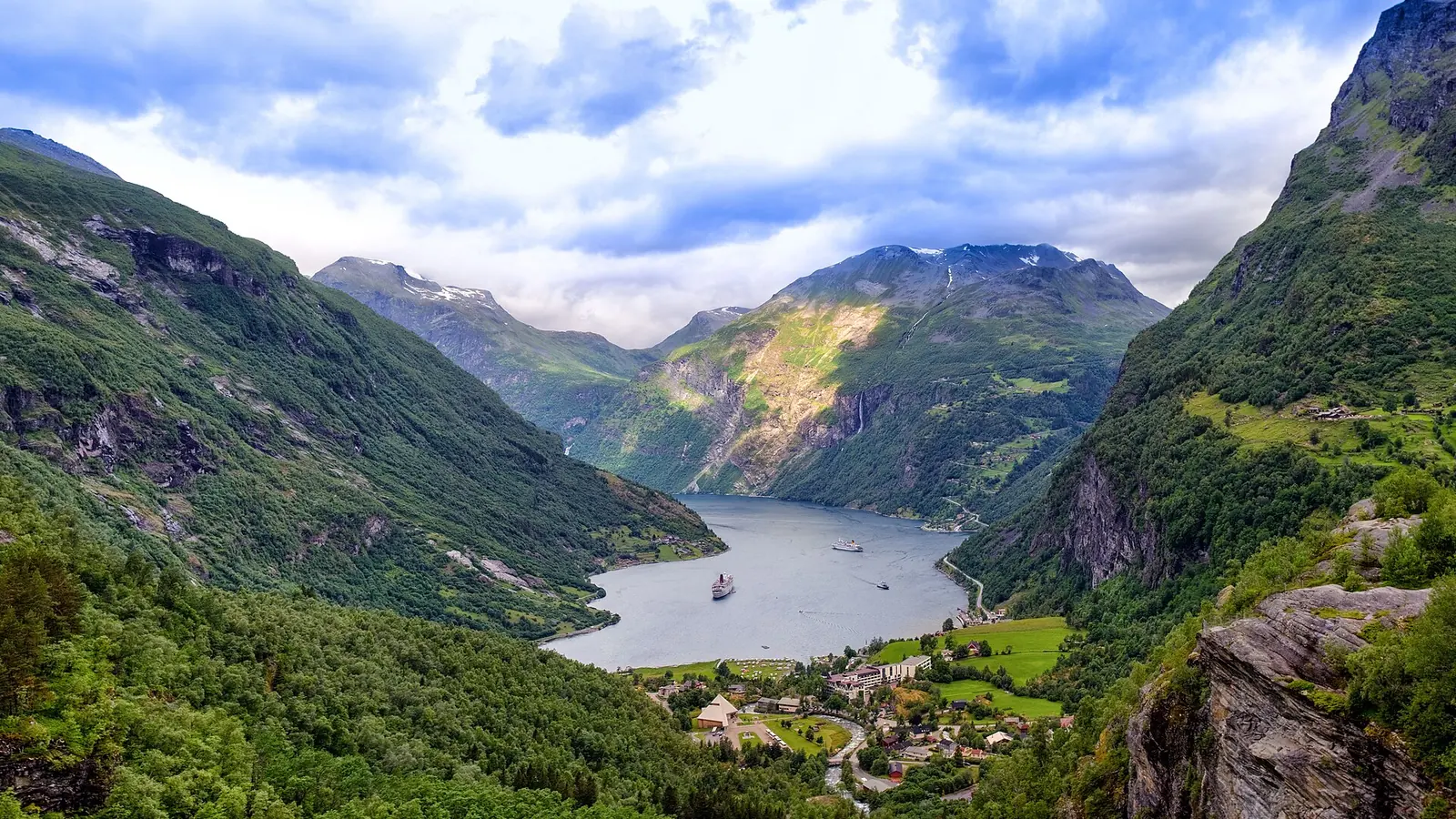
The old cheap-Norway text led with fjords, clear water, islands, Viking history, food, a rugged coast and the midnight sun. It also noticed regional climate differences and Norway’s high-cost reputation. Those are useful planning themes. Its claim that all of Norway receives twenty hours of daylight, universal July hotel promotions and automatic weekend discounts have been removed.
Norway’s geography makes the international ticket only one part of the route. Oslo Gardermoen (OSL) is the principal hub, but Bergen can be a stronger start for western fjords and Tromsø for many Arctic itineraries. Add domestic air, train, ferry, express boat, bus, road tolls and accommodation before deciding which gateway is cheap.
- Hub benchmark
- Oslo Gardermoen (OSL)
- Regional alternatives
- Bergen, Tromsø and other airports matched to the final geography
- Old-page landscapes
- Fjords, clear water, islands, rugged coast and northern daylight
- Complete price
- International fare plus every domestic, ferry, road and overnight component
Select the gateway backwards
Start at the landscape on the itinerary and trace the cheapest credible route home
For western fjords, compare Bergen and regional access with an Oslo arrival plus rail or domestic flight. For an Arctic stay, compare Tromsø or the relevant northern airport against the cost and risk of a separate connection. For an Oslo city break, do not pay for regional complexity that the trip does not need.
An open-jaw ticket can remove backtracking after a linear rail, road or coastal journey. Compare it with a round trip after adding one-way car terms, ferry reservations and the actual place where the route ends.
Make the connection survive
A separate domestic ticket needs weather margin and a priced recovery plan
When international and domestic sectors are on one protected itinerary, disruption is handled differently from separate tickets. If self-connecting, allow for immigration, baggage and terminal movement, then ask what a missed last flight or boat would cost. Remote accommodation can be far more expensive than the initial fare difference.
Ferries and scenic railways can be part of the experience, but limited departures and seasonal capacity make them structural bookings rather than casual add-ons.
Control daily costs
A kitchen, planned groceries and fewer one-night stops often save more than fare folklore
Norway’s cost reputation should trigger arithmetic rather than alarm. Compare accommodation with breakfast or cooking facilities, locate supermarkets along the real route and reduce repeated check-ins. Public transport can outperform a hire car in cities; a car can become rational for a rural group when tolls, ferries, parking and fuel are included.
Food is part of Norway, not merely a budget line. Choose the regional meal that matters and let simpler self-catered or bakery meals support it rather than abandoning local cuisine entirely.
Put daylight on the map
Midnight sun is northern and seasonal, not a nationwide twenty-hour promise
North of the Arctic Circle, the sun can remain above the horizon for a period around summer; exact dates vary by latitude. Southern Norway has long summer days but not the same phenomenon. Use the official destination information for the location and travel dates, and plan sleep as seriously as sightseeing.
- Choose the region before the international airport.
- Compare protected and separate domestic legs honestly.
- Include ferries, tolls, fuel and one-way fees.
- Verify midnight-sun dates for the exact latitude.