

Perpignan fare strategy
A cheap Perpignan route is a gateway calculation, not a promise attached to one small airport
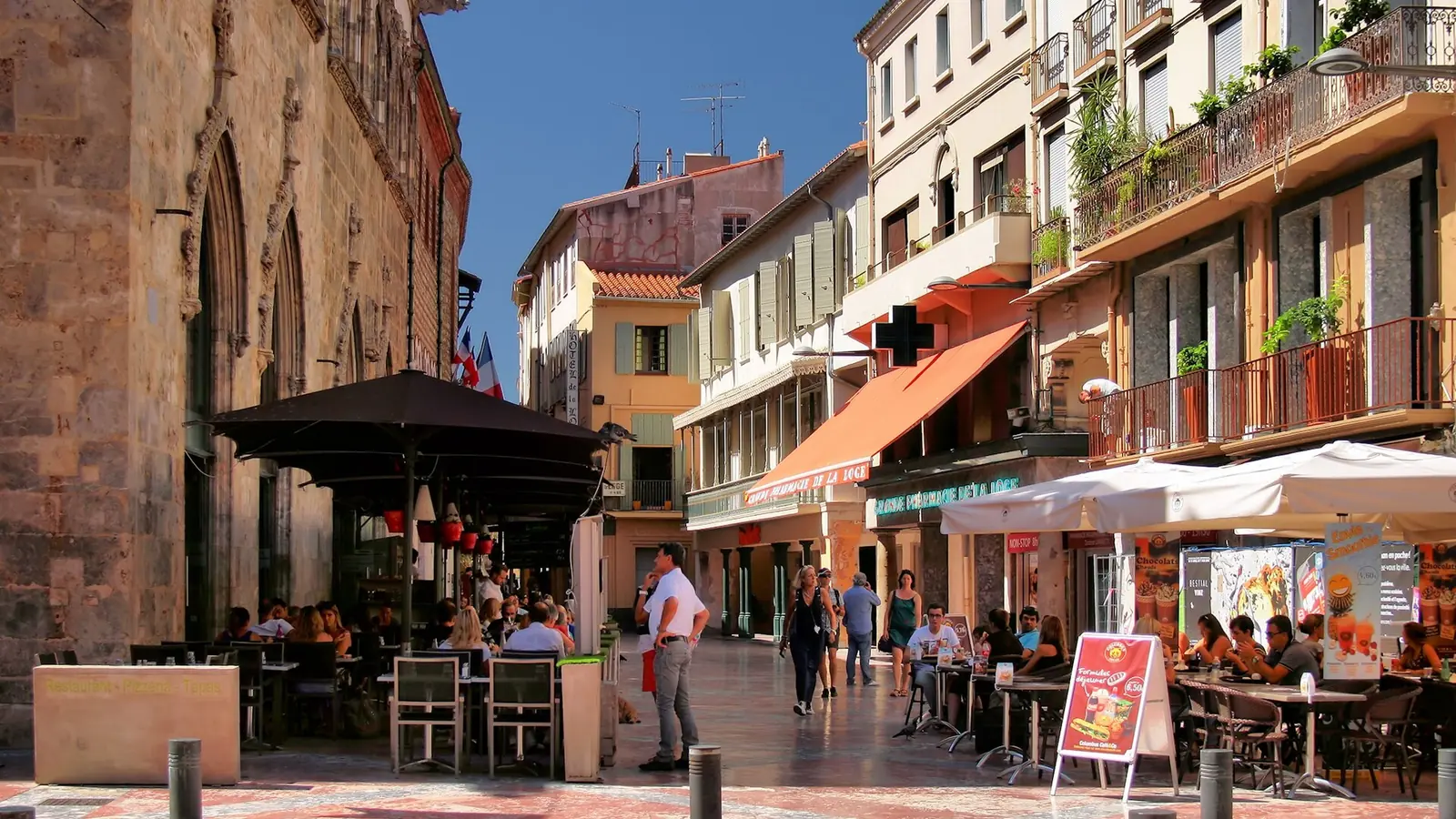
Perpignan’s French and Catalan cultural overlap appears in regional food, coffee and herbal tea, Place Arago, Loge de Mer, old lanes, churches, fabrics, jewellery, cafés and an evening river setting. Its position near Spain makes it a useful base, but only when the chosen airport and onward journey fit the route.
Perpignan–Rivesaltes Airport (PGF) is the closest air gateway, yet limited schedules mean it should be compared with Girona, Barcelona, Toulouse or Montpellier only when the complete ground route is credible. The right answer depends on the origin, season, arrival hour and whether the itinerary continues to the Mediterranean coast, the Pyrenees or Catalonia.
- Closest airport
- Perpignan–Rivesaltes (PGF)
- Wider comparison
- Girona, Barcelona, Toulouse or Montpellier with every onward segment included
- Historic core
- Le Castillet, Loge de Mer, cathedral area, Place Arago and old streets
- Old-page identity
- French Catalan food, fabrics, jewellery, cafés and borderland culture
Compare gateways fully
PGF protects time; a larger airport must earn its place with frequency or a materially lower total
For each airport, add the flight basket, station or coach transfer, onward ticket, luggage handling and any overnight forced by the schedule. Girona or Barcelona can fit a wider Catalan route; Toulouse or Montpellier may suit an Occitanie rail itinerary. None is automatically a Perpignan airport simply because the airfare is lower.
Check the final departure of the day and the return connection before purchase. A self-transfer after a delay carries no automatic protection, and a small late saving can become a taxi or hotel bill far from Perpignan.
Walk the source material
Place Arago and Loge de Mer belong to a compact old-centre route, not a generic monument list
Begin around Le Castillet and the historic streets, continue toward Loge de Mer and the cathedral area, then use Place Arago and the banks of the Basse as the transition to cafés and the newer city. Churches, old lanes and riverside atmosphere become meaningful when tied to this walk.
Some older attractions have changing access and opening hours. Check the official tourism listing before building a day around an interior; the architecture and public realm still provide context when a building is closed.
Spend on the borderland
Catalan identity is visible in markets, food and craft without reducing it to a vague French–Spanish mixture
Look for regional produce and Catalan cooking in current markets and restaurants, then compare lunch menus with evening prices. Coffee and herbal tea belong to Perpignan’s café life without needing a claim that they are unique products available nowhere else.
Fabrics and jewellery can still anchor a shopping search, but avoid the source’s claim that every visitor leaves with impossibly heavy bags. Independent shops, market days and craft provenance matter more than volume.
Choose the outward day
Coast, fortress country and the Pyrenees require different transport budgets
Before buying a regional pass or hiring a car, decide whether the trip extends to beaches, Collioure and the coast, inland villages, mountain routes or across the border. Rail serves some corridors well; others require a bus, seasonal service or car. The cheapest airfare should leave enough budget and daylight for that real purpose.
- Keep PGF as the proximity benchmark.
- Add every rail, coach, taxi and hotel required by an alternative airport.
- Use the old centre as a walkable cultural day.
- Select coast or mountain transport before buying a pass.