

Lyon arrival guide
Land with a plan for Lyon’s two rivers, two hills and several arrival hubs
Flights to Lyon should be compared through current schedules, direct-versus-connecting service, baggage and arrival time rather than a universal booking window. The city then rewards a clear geographic plan: the Presqu’île lies between two rivers, Vieux Lyon sits beneath Fourvière and Croix-Rousse rises to the north.
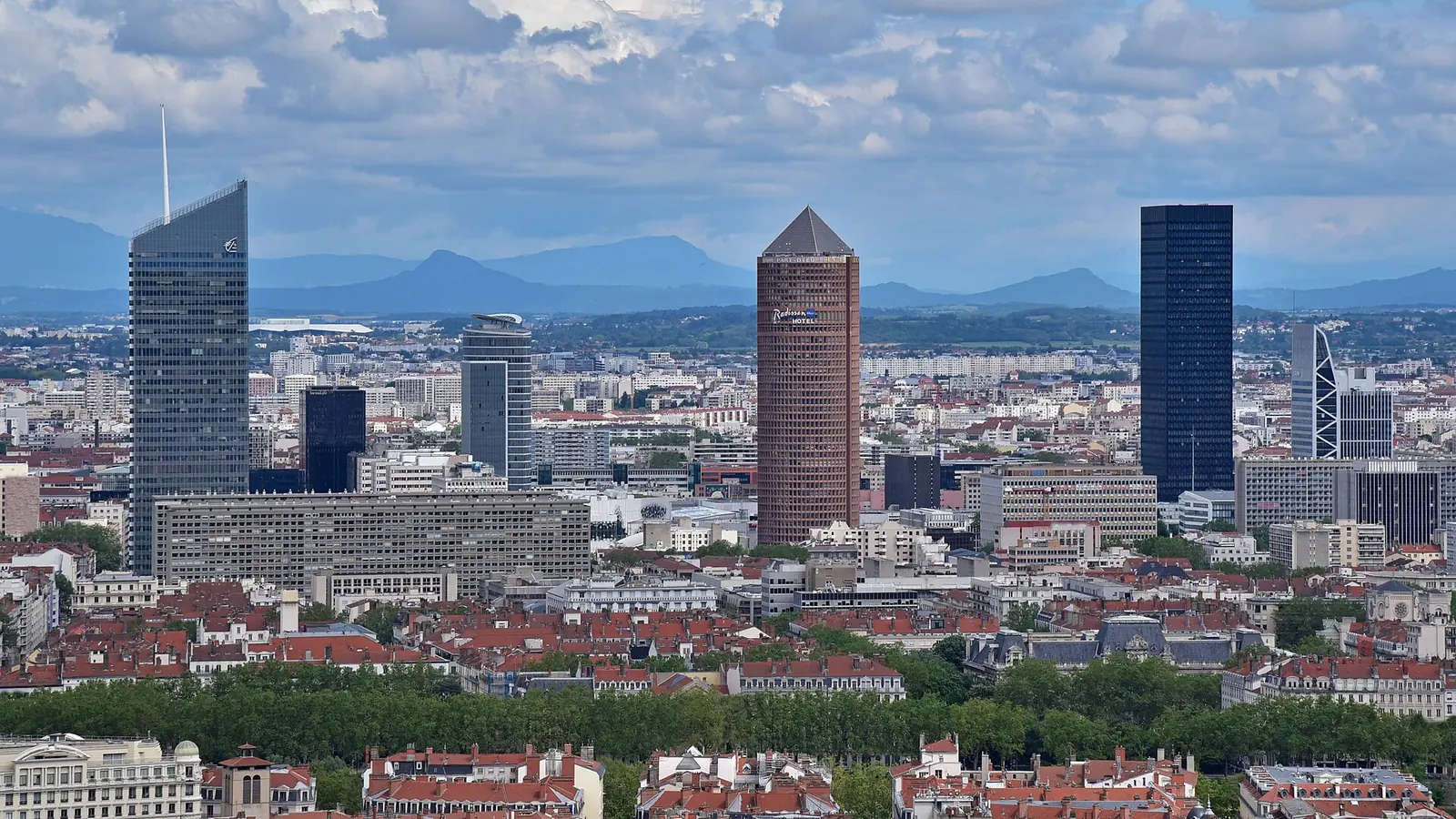
Lyon–Saint Exupéry Airport (LYS) sits east of the city beside a TGV station. Rhônexpress links the airport with Part-Dieu and intermediate interchanges; public bus combinations may cost less but require more time and a change. Once in Lyon, the Rhône, Saône and hills explain the map: the Presqu’île lies between the rivers, Vieux Lyon sits below Fourvière, and Croix-Rousse rises to the north.
- Airport
- Lyon–Saint Exupéry (LYS), beside its TGV station
- Main city interchange
- Part-Dieu for Rhônexpress, rail, metro, tram and buses
- Historic orientation
- Presqu’île, Vieux Lyon, Fourvière and Croix-Rousse
- Old search intent retained
- Flights, direct routes, connections, schedules, low-cost fares and advance planning
Finish the arrival
Choose Rhônexpress for a controlled transfer or public transport for a slower lower-cost route
Rhônexpress is the simplest fixed-link baseline between LYS and Part-Dieu. From its intermediate stops, metro or tram may provide a cleaner final journey than travelling all the way to the terminus. Public buses can reduce the fare, but they depend on the live route, transfer and traffic conditions; compare them against the landing time and luggage load.
The airport TGV station is useful for selected regional journeys, but not every train stops there. Do not assume a flight connects naturally to the first city name displayed on the station map. Check the exact departure, protected margin and alternative from central Part-Dieu.
Read the city shape
The rivers divide Lyon into visitable chapters rather than inconvenient barriers
The Presqu’île supports an easy first walk through central squares and commercial streets. Across the Saône, Vieux Lyon’s lanes and traboules sit below Fourvière; the climb, funicular and viewpoints deserve their own pace. Across the Rhône, Part-Dieu is the practical transport and business anchor rather than a substitute for the historic centre.
Croix-Rousse adds the history of silk workers, slopes and passageways. Because the city changes elevation quickly, a hotel that appears close on a flat map may involve a climb. Check contour, metro access and the final walk with luggage.
Plan for food and culture
Treat Lyon’s food reputation as neighbourhood exploration, not a single expensive meal
Traditional bouchons, markets, bakeries and Les Halles offer different ways into the city’s cuisine. Reserve only where a particular restaurant matters and leave space for ordinary neighbourhood food. Museum choices, Roman sites and river walks can then be grouped geographically instead of stacked into one rushed day.
For an Alps, Beaujolais or wider Rhône itinerary, decide whether Lyon is a stay or merely a transfer. One proper city day is more valuable than repeatedly crossing it between airport, station and a remote base.
Use live schedules
Airline names and weekly patterns belong to the travel date, not permanent copy
Specific low-cost carriers, weekday travel and a six-to-eight-week booking window do not guarantee a cheaper Lyon ticket. Routes, operating days and fares change. Check the airline and airport schedule for the actual season, then compare the final basket and the arrival that leaves a usable connection.
- Compare direct and protected connecting itineraries.
- Match the airport transfer to the hotel side of the rivers.
- Check elevation as well as map distance.
- Verify every live route and timetable before purchase.