

Ireland fare strategy
Choose the Irish gateway for the trip you want, not for the lowest airfare alone
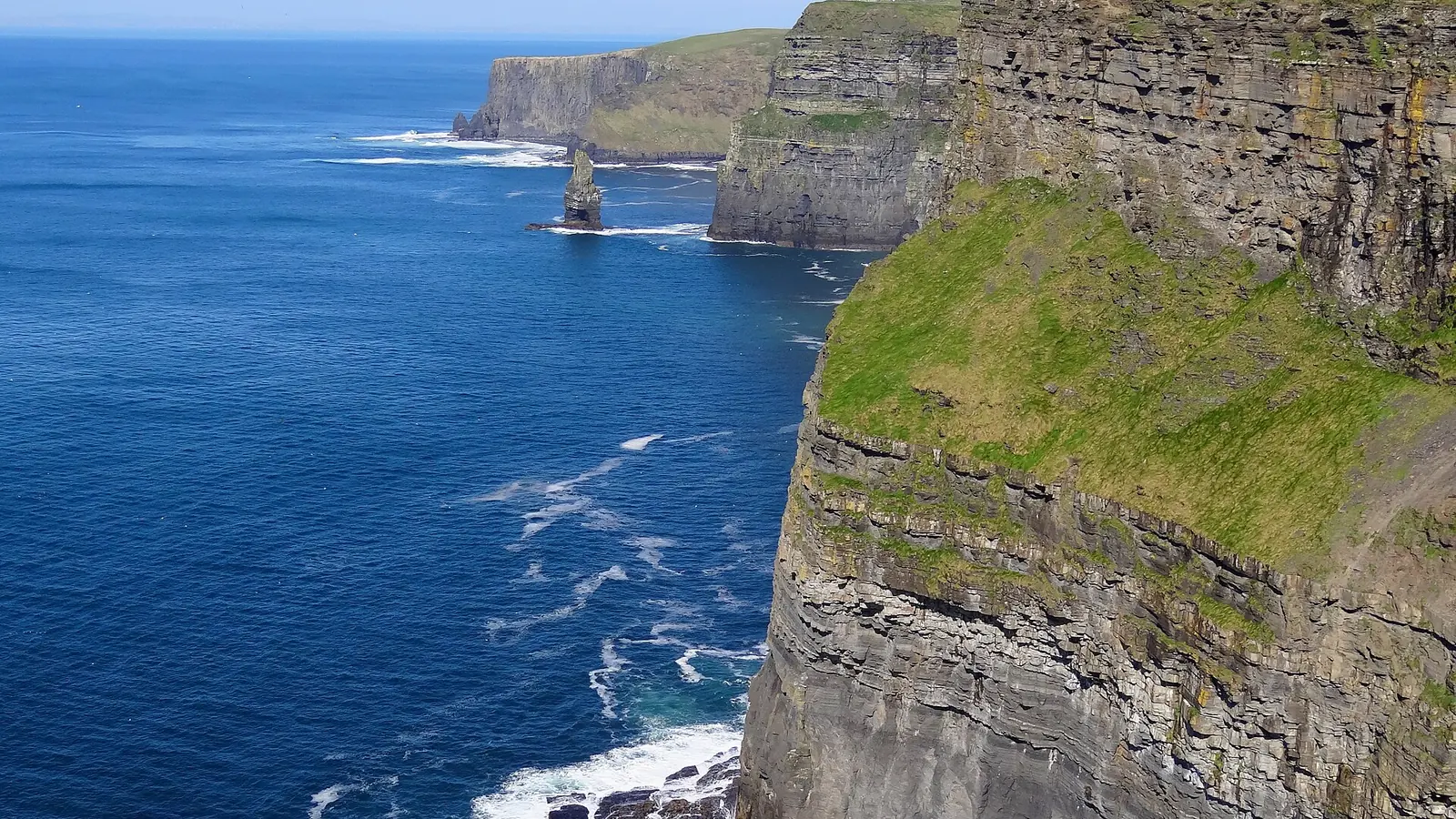
Ireland’s long human history sits beside green countryside, the Cliffs of Moher, Atlantic coastline, the Burren’s almost lunar limestone landscape, Dublin pub culture and living Celtic and Gaelic traditions. A compact island can still contain slow roads, so the gateway and regional route matter more than its dimensions suggest.
Ireland has several useful gateways on one island and in two jurisdictions. Dublin often offers the broadest choice; Shannon can shorten a western itinerary; Cork works naturally for the south; Belfast can be the right start for Northern Ireland. A fare becomes cheap only after the onward journey, car days, cross-border details and final-night positioning are counted.
- Main comparisons
- Dublin (DUB), Shannon (SNN), Cork (ORK), Belfast International (BFS) and Belfast City (BHD)
- Landscape anchors
- Cliffs of Moher, the Burren, Atlantic coast and green interior
- City anchor
- Dublin for museums, neighbourhoods, food, music and pub culture
- True trip cost
- Airfare plus ground route, car terms, fuel, parking and accommodation
Match gateway to region
Shannon can beat Dublin for the west even when the flight costs more
For the Cliffs of Moher, the Burren, Galway or a west-coast road trip, compare Shannon and Ireland West with Dublin after adding the cross-country transfer. For Cork, Kerry and the south, start with Cork and then test Dublin only if the frequency or through fare creates a real advantage. Belfast’s two airports serve different transfer patterns and should be checked separately.
An open-jaw itinerary—arriving through one gateway and leaving through another—can eliminate a full day of backtracking. Price it against a round trip after including any one-way car fee and the location where the vehicle can actually be returned.
Do not compress the map
A compact island still contains slow roads, weather and stops worth making
Ireland’s compact dimensions can suggest that every attraction is within easy road reach, but distance alone is misleading. Coastal roads, town traffic and spontaneous viewpoints can make a short line on the map a full day. The Cliffs and Burren belong naturally together only when the route leaves time for both rather than reducing each to a photograph.
Travellers avoiding a car should build around confirmed rail and coach corridors. A low-cost regional landing is not a saving if the final destination has no workable same-day public connection.
Keep the character
Use Dublin for city culture and the Atlantic side for landscape—not as substitutes for each other
Dublin’s pub tradition is more meaningful when paired with neighbourhood history, museums, live music etiquette and responsible transport home. The western coast offers a different rhythm: cliffs, limestone, small towns and changing weather. Trying to commute between the two experiences every day increases cost and weakens both.
Celtic and Gaelic themes should open questions rather than flatten the island into one culture. Place names, Irish-language regions and the distinct histories of the Republic of Ireland and Northern Ireland deserve exact regional context.
Compare like with like
Advance purchase helps planning, but one or two months is not an airfare law
Search the actual route over a date range and compare direct flights, protected connections and ferry-plus-rail alternatives where relevant. Add cabin and checked baggage, airport transport, car insurance terms and the cost of reaching the first night’s base. The lowest headline number is only one line in that calculation.
- Start with the region, then shortlist airports.
- Test an open-jaw route for a linear road trip.
- Allow realistic time for the Burren and Atlantic coast.
- Verify border, driving and rental conditions before payment.