
.jpg)
Bilbao city guide
The Guggenheim is the landmark; the Nervión is the route that makes the city legible
Bilbao is a green, hilly Basque city on the tidal Nervión, where contemporary sculpture and the Guggenheim stand beside older churches, galleries, markets and a distinctive food culture. That contrast gives a visit its shape and helps decide where the airport arrival should end.
Bilbao Airport (BIO) lies outside the centre. Airport buses are normally the straightforward public link, with taxis useful for a late arrival, several passengers or accommodation that would require changes. Once in the city, the river, tram, metro and walkable central districts make a car unnecessary for most short stays.
- Airport
- Bilbao Airport (BIO)
- Orientation line
- The Nervión estuary through the Guggenheim and central districts
- Old-page landmarks
- Guggenheim, Jeff Koons, Santiago Cathedral, San Antón and fine arts
- Wider trip
- Biscay coast and other Basque towns by public transport or car
Read the city
Walk from contemporary Abandoibarra toward the older Casco Viejo
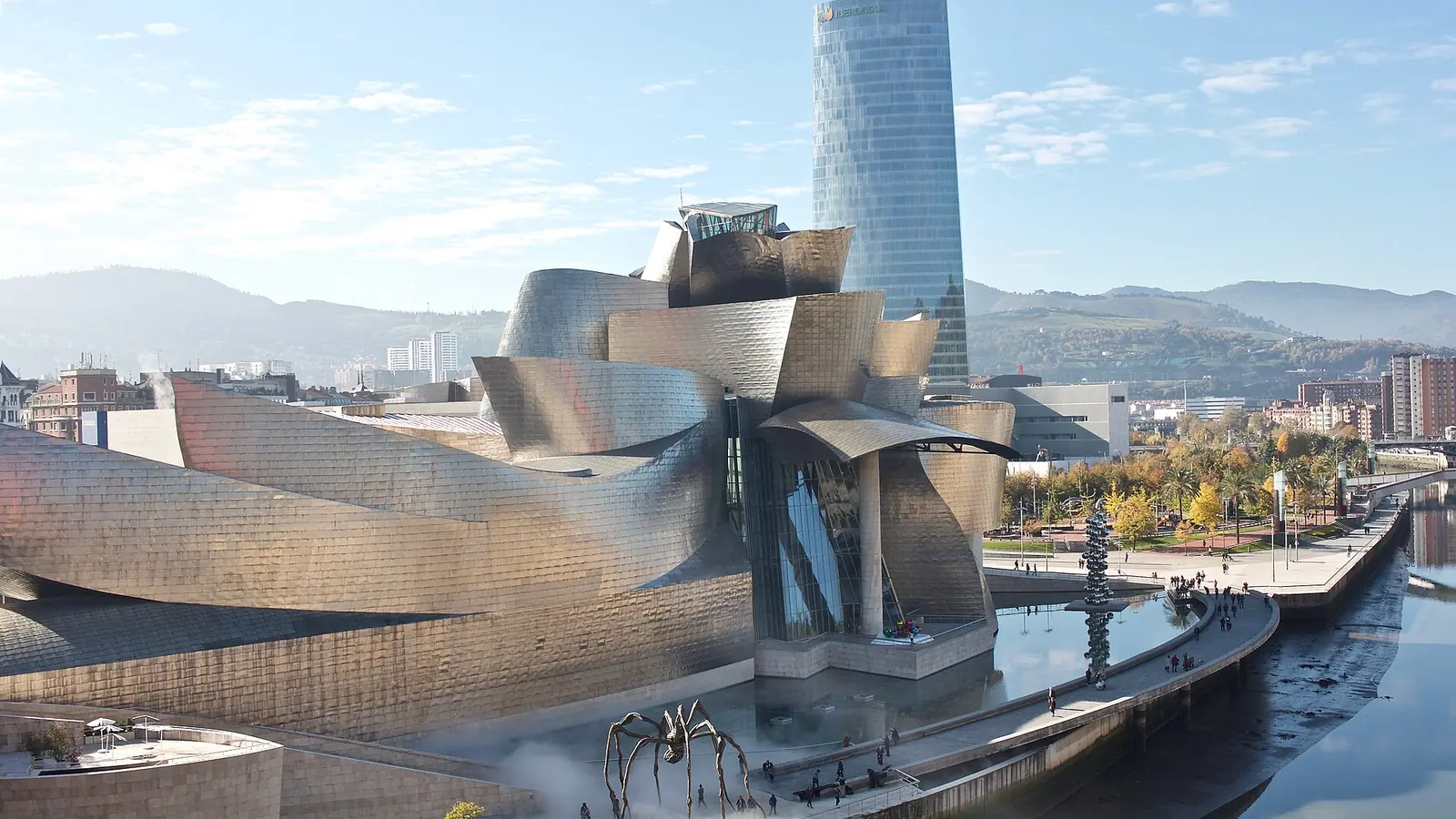
The Guggenheim’s titanium forms, riverside setting and outdoor works—including Jeff Koons’s Puppy—make the museum exterior part of the urban route. Inside, the value depends on current exhibitions, so check the programme rather than assuming the building alone defines the collection.
Continue along the river and into Casco Viejo for a different scale of Bilbao. Santiago Cathedral and the church of San Antón carry the historic and religious thread, while Mercado de la Ribera and the surrounding streets bring food into the same walk without turning the day into a disconnected list.
Museum choices
Guggenheim and the Fine Arts Museum answer different questions
A traveller interested in contemporary art and architecture may give the Guggenheim most of a day. The Bilbao Fine Arts Museum offers a broader chronological collection and deserves separate attention. Smaller religious and local collections can deepen the museum itinerary, but only if opening days fit.
Reserve time instead of buying every attraction in advance. The historic centre, bridges and riverfront deliver much of Bilbao’s character without a ticket, while temporary exhibitions and combined cultural offers change.
Eat and leave town
Pintxos work best as part of a neighbourhood evening, not a single famous address
Bilbao’s culinary pleasures are best approached through a compact area: order modestly at several bars and pay attention to local rhythms. Casco Viejo, Ensanche and other neighbourhoods have different atmospheres; the best choice is the one near the evening’s final transport.
For more landscape, the Biscay coast can become a day trip. Public transport reaches several towns, while a car expands the choice but adds parking and a sober-driving obligation. Do not compress a coast excursion into the same day as two major museums.
Flight comparison
Keep the green hills in the plan by protecting the first usable day
A very late arrival can erase the first evening and force a taxi; a very early departure can do the same at the other end. Compare BIO fares with baggage, airport transport and accommodation together. If an itinerary connects, favour a protected ticket when the next reasonable flight is infrequent.
- Confirm BIO rather than a distant airport offered under a regional search.
- Check the airport bus stop against the hotel’s actual address.
- Choose museum days from current opening calendars.
- Leave one weather-flexible slot for the coast or hill viewpoints.