
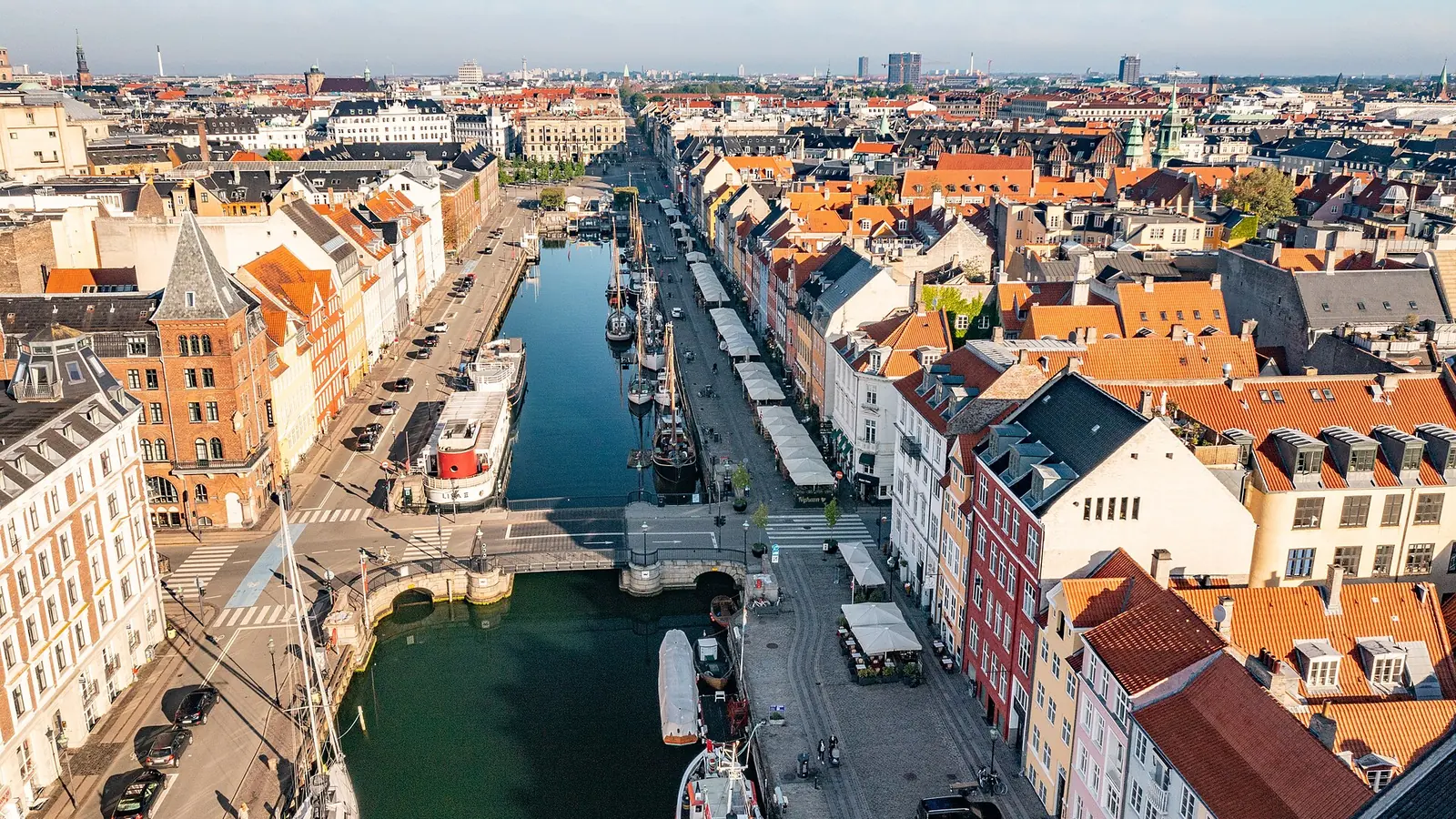

Denmark trip logic
Copenhagen and Jutland need different airports—and different kinds of holiday
Denmark combines historic towns and castles with modern design, strong cycling culture, food, museums, Kronborg and the cliffs at Stevns. Those places are not one compact attraction circuit: a useful flight plan starts by separating a Copenhagen-and-Zealand visit from an itinerary focused on Jutland.
Copenhagen Airport is exceptionally well connected to the capital and the island of Zealand. Billund is often the more logical gateway for central Jutland and family trips built around that region. Choosing between them before looking at the fare prevents a cheap ticket from turning into a long cross-country transfer.
- East Denmark
- Copenhagen (CPH), the capital, Kronborg and Zealand day trips
- Jutland gateway
- Billund (BLL) for central and southern Jutland
- Themes retained
- Castles, cycling, Danish design, food, museums and coastal landscapes
- Key comparison
- Airport-to-itinerary time rather than airfare alone
Arrive in Copenhagen
Metro and regional rail make CPH part of the city transport network
From Copenhagen Airport, both metro and regional trains serve the city. The metro is useful for several neighbourhoods linked by the M2 and the wider network, while the train is convenient for Copenhagen Central and onward rail journeys. The best choice is determined by the accommodation address, not by a generic centre label.
This easy transfer makes a car unnecessary for most capital stays. Copenhagen’s cycling culture is real, but visitors should choose a bicycle only when they are comfortable with local lanes and traffic conventions. For museums, restaurants and waterfront districts, walking and public transport often produce the simplest first visit.
Castles and literature
Kronborg belongs to a north-Zealand day, not a rushed airport stop
Kronborg Castle at Helsingør is closely associated with Shakespeare’s Hamlet. It is north of Copenhagen and works best as a planned rail excursion, perhaps combined with other places along the Øresund coast. Check the castle’s opening calendar before assigning a day, because seasonal hours can change.
Denmark’s royal and fortified sites are not interchangeable. Pick one or two that fit the route instead of chasing a vague list of castles. This leaves time for the streets, gardens and waterfronts that make its historic towns meaningful in the first place.
Cliffs and coast
Stevns Klint demands a different transport calculation
Stevns Klint lies south of Copenhagen and preserves the geological boundary associated with the asteroid impact at the end of the age of dinosaurs. Historic Old Højerup Church stands dramatically at the cliff edge. Public transport is possible for parts of the area, but a car can make a wider coastal day much easier.
Do not confuse Stevns Klint with Møns Klint; they are separate destinations. If the cliffs are a priority, compare travel time, daylight and weather before committing to a flight that lands late or leaves early.
Fare strategy
A lower Danish fare is useful only when it lands on the correct side of the country
Compare CPH and BLL only when both genuinely serve the itinerary. Include rail, bus or car hire, and price the return to the airport as carefully as the arrival. For a split trip, an open-jaw ticket can avoid retracing the route across Denmark.
- Use CPH for the capital, Zealand and efficient international rail connections.
- Use BLL when Jutland—not Copenhagen—is the real centre of the holiday.
- Check bicycle carriage rules before building a cycling trip around trains.
- Reserve high-priority museums or castles around their own opening calendars, not around assumptions.