

Norway gateway guide
Norway’s shape makes the nearest useful airport more valuable than the biggest one
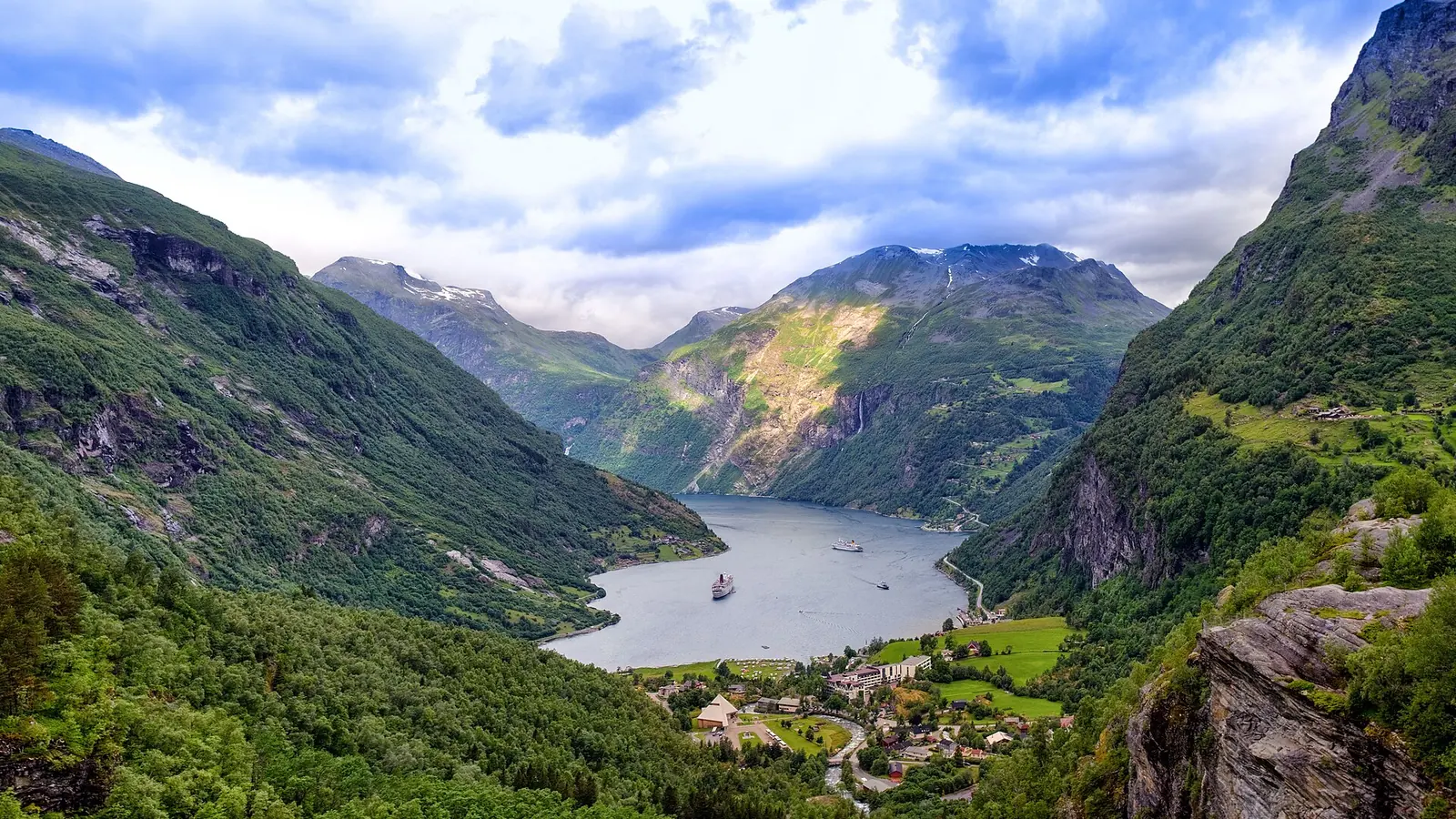
Norway’s fjords, clear water, rugged islanded coastline, Viking history, regional food and midnight sun create several different journeys. Scale is the decisive issue: southern cities, the western fjords and Arctic Norway are not day trips from one national gateway.
Oslo Airport (OSL) offers the widest hub function, but Bergen (BGO), Tromsø (TOS), Trondheim and a network of regional airports may put the traveller much closer to the real destination. Domestic air, rail, road, ferry and express boat are parts of the same comparison, not afterthoughts to an international fare.
- National hub
- Oslo Gardermoen (OSL)
- Regional anchors
- Bergen for western fjords; Tromsø for many Arctic itineraries
- Old-page landscapes
- Fjords, islands, coast, clear water and midnight sun
- Cost decision
- International fare plus domestic leg, ferry, road and accommodation
Follow the geography
Oslo is a capital destination; it is not the automatic doorway to every fjord
OSL works for Oslo and for protected connections into the domestic network. Bergen can remove hours from a western-fjord itinerary and is a destination in its own right. Tromsø is an air and sea hub for parts of Northern Norway; there is no railway to the city, so an Oslo train is not a simple substitute.
For Lofoten, the North Cape, Svalbard or a particular fjord arm, identify the exact town, island or trailhead before opening the flight search. A small regional airport with one connection may outperform a cheap Oslo arrival followed by a full day on the ground.
Fjords are transport systems
Rail, ferry and road can be the experience—and the source of missed connections
Norway’s coast is both scenery and transport geography. Ferries and express boats are essential links, while mountain roads and tunnels set the pace. Build a fjord itinerary from timetables outward: confirm the final bus or boat, then choose the flight that leaves a reasonable margin.
The national Entur planner can combine public-transport options, but seasonal services and road conditions still need a live check. A rental car gives independence, yet one-way charges, ferries, winter tyres and closed mountain passes belong in the budget.
Midnight sun and winter light
The midnight sun belongs north of the Arctic Circle, not to all Norway
The midnight sun does not cover the whole country equally. In Northern Norway, the sun remains above the horizon for a period that varies by latitude; Svalbard’s season is much longer than Tromsø’s. Southern Norway receives very long summer days but not the same continuous sun.
Winter creates the opposite planning logic: limited daylight, snow and weather-sensitive transport, alongside northern-lights travel. Aurora is never guaranteed. Build several worthwhile daytime and indoor activities so the trip succeeds without a particular sky.
Make the fare meaningful
Norway’s expensive reputation is a reason to price the itinerary, not to repeat myths
Weekend hotel bargains and a universally cheap July are not reliable rules. Compare accommodation with the flight because small-town supply, cruises, festivals and outdoor season can create local peaks. Self-catering or a rail-and-city pass may help, but only when it matches the route.
- Search the closest regional airport before accepting Oslo by default.
- Keep domestic segments on one protected ticket where practical.
- Check ferry, bus and mountain-road status before fixing a same-day arrival.
- Treat midnight sun, northern lights and ski travel as different seasonal products.