

Russia gateway and route guide
Russia spans eleven time zones: choose the city before searching the country
Russia’s vast scale, long borders, natural-resource regions, Moscow airport system and St Petersburg already describe several very different journeys. Geography is the useful foundation: the wrong gateway can leave thousands of kilometres still to travel, while route, entry and payment conditions can change independently of distance.
Current international flight patterns, entry requirements, transit options and payment practicalities can change quickly. A credible guide cannot promise that a historic nonstop route still operates. Start with the exact Russian city or region, then verify every segment with official authorities and the operating carrier.
- Scale
- A transcontinental country spanning eleven time zones
- Major visitor gateways
- Moscow’s SVO, DME, VKO and ZIA; St Petersburg Pulkovo (LED)
- Historic city anchors
- Moscow and St Petersburg, with very different onward geography
- Live checks
- Route operation, documents, transit, payment access and official travel advice
Name the real destination
A flight to Moscow is not a flight to the Caucasus, Siberia or the Far East
Moscow functions as a major air and rail hub, but routing through it may add a long domestic segment. St Petersburg is the logical cultural gateway for a north-western city trip. Other regions may be better served by their own airports or by a connection elsewhere. Search airport pairs, not the country name alone.
On a domestic continuation, check whether baggage transfers, whether the airport changes and whether both sectors sit on one protected ticket. Russia’s time zones can also change the apparent connection duration; read local departure and arrival times carefully.
Moscow and St Petersburg
Treat the two classic cities as distinct stays, not a single attraction list
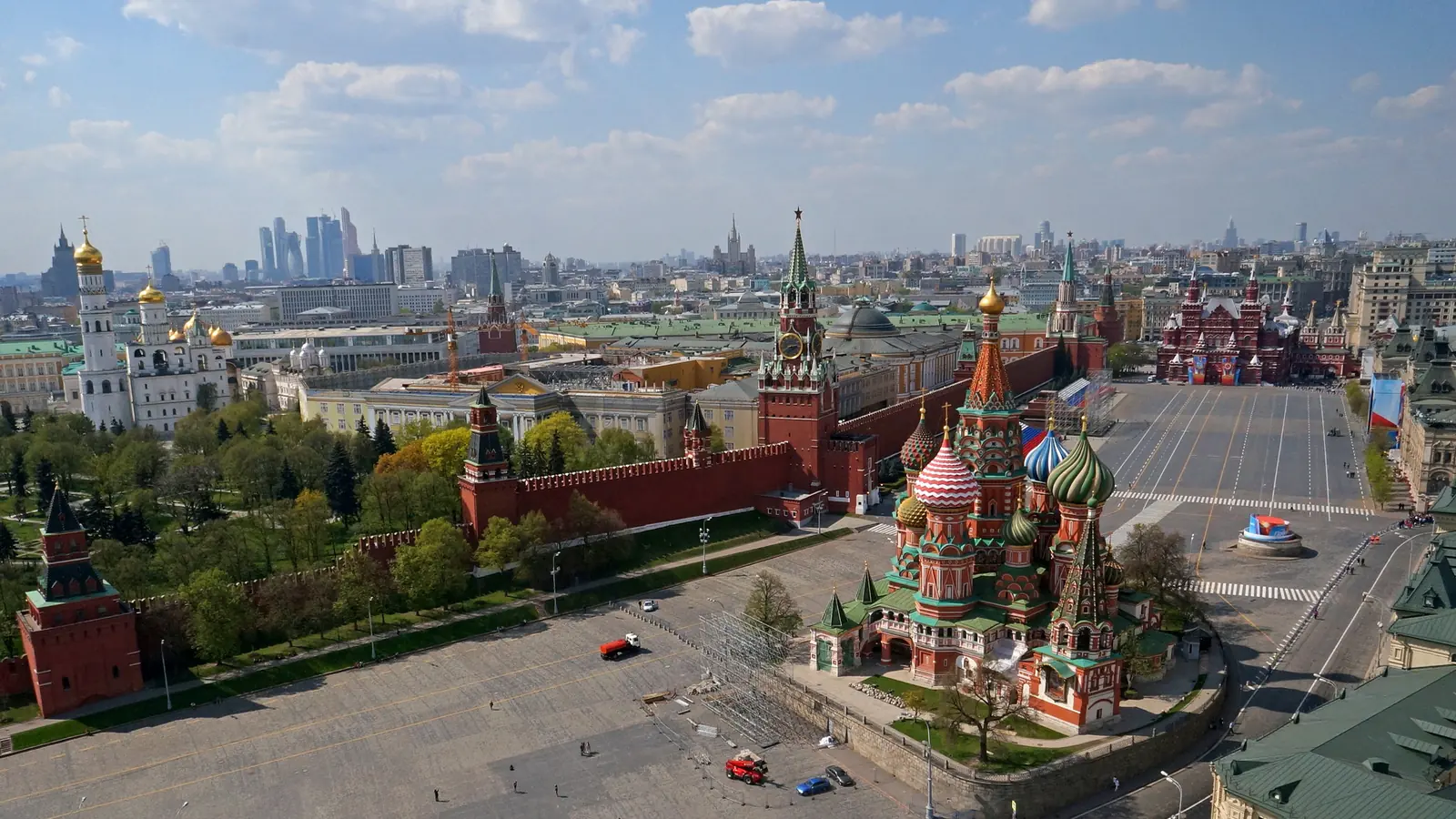
Moscow’s historic core includes Red Square, the Kremlin complex and Cathedral Square, with major galleries and parks across a much larger metropolis. St Petersburg is organised around the Neva, imperial architecture and museums such as the Hermitage. Each city can fill several days without a long-distance add-on.
Rail can link them, but timetable, station, ticket and document checks are separate from the flight. An open-jaw itinerary—arriving in one city and departing from another—may remove backtracking when available and permitted.
Beyond the capitals
Distance, climate and local transport should decide how much of Russia fits
The source’s scale and resource themes point toward very different landscapes, from northern forests and Baltic approaches to steppe, mountains and Pacific regions. They cannot be responsibly collapsed into one excursion. Choose one region, identify its season and calculate the internal travel days before buying the international fare.
Winter can produce lower demand on some dates but also adds clothing, short daylight and disruption risk. Summer creates its own peaks. No country-wide month guarantees a cheap or easy journey.
Current conditions
Verify more than the visa before committing money
Check official entry and registration requirements, the legality and availability of every transit point, accepted payment methods, insurance validity and the traveller’s government advice. Recheck shortly before departure because a correct answer at research time may not remain correct.
- Use the exact destination airport and all domestic sectors in the first comparison.
- Avoid assuming that an old UK, US or European route still operates.
- Keep cross-airport transfers and separate tickets out of tight connections.
- Rely on official authorities and operating carriers for volatile requirements.